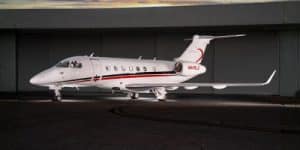

The Embraer Phenom family occupies a valuable position in the light-jet market: it offers modern cabin design, strong field performance, and a clear step-up path from owner-flown aircraft into professionally operated business jets. For a buyer, however, “Embraer Phenom” is not a single acquisition decision. The Phenom 100 and Phenom 300 families serve materially different missions, carry different operating expectations, and trade in markets where condition, pedigree, and equipment can move value significantly.
A disciplined search starts with mission definition, then narrows inventory by model, year, maintenance status, avionics, interior condition, and comparable sales evidence. The best aircraft is not necessarily the lowest-priced listing. It is the aircraft whose capability, near-term maintenance exposure, and residual position align with the buyer’s operating plan.
The Embraer Phenom Line at a Glance
The Phenom 100 is a very light jet designed around short business trips, owner-pilot utility, training, and efficient regional transportation. It typically accommodates four passengers comfortably, with configurations allowing additional occupants depending on baggage, fuel, and operating requirements. Its single-pilot certification and approachable cockpit philosophy have made it especially relevant to qualified owner-operators and organizations using light jets for mission training.
The Phenom 300 is a larger, faster, and more capable light jet. It provides a substantially stronger cabin proposition for corporate transportation, generally supports six to eight passengers depending on configuration, and has the range and cruise performance to cover a broader set of US business missions. For buyers comparing a Phenom 300 against aircraft such as the Citation CJ3+, CJ4, Pilatus PC-24, or HondaJet Elite II, the decision often turns on cabin dimensions, runway needs, maintenance strategy, and desired mission radius rather than headline speed alone.
Within each family, variants matter. A Phenom 100EV is not simply a newer Phenom 100, and a Phenom 300E should not be valued as a cosmetic refresh of an earlier 300. Updated engines, avionics, cabin features, and production-year improvements influence both buyer demand and future resale liquidity. Compare aircraft at the variant level before using price-per-year or price-per-hour shortcuts.
Matching the Phenom to the Mission
The Phenom 100 is compelling when the mission involves one to three passengers, frequent trips under roughly two hours, and access to airports where efficient runway performance matters. It can be a logical alternative to a high-end turboprop or a larger piston aircraft for buyers who prioritize jet speed and operating at higher flight levels. The trade-off is cabin scale. A Phenom 100 can be highly effective for short, focused trips, but it is not a substitute for a midsize cabin experience.
The Phenom 300 is better suited to buyers who regularly transport clients, executive teams, or family groups and need greater nonstop capability. Its cabin, speed, and baggage capacity support more demanding schedules, while its light-jet operating profile remains more accessible than that of a super-midsize platform. That said, a buyer should resist purchasing excess capability solely for occasional long missions. If six-passenger trips are rare and most legs are 300 nautical miles or less, the larger aircraft can create unnecessary acquisition and operating cost.
Payload performance deserves attention in either model. A trip that works well with two passengers and moderate bags may be less practical with a full cabin, high summer temperatures, and a short runway. Review the actual missions flown or expected – passenger count, luggage, departure airport elevation, typical stage length, and reserve policy – rather than relying only on brochure range figures.
What Drives Embraer Phenom Market Value
Year, total time, and engine hours establish a starting point, not a final value. In the pre-owned Phenom market, buyers and lenders will also weigh maintenance status, enrollment programs, avionics configuration, damage history, ownership records, and the quality of the aircraft’s presentation.
Engine coverage can materially affect a buyer’s exposure to unexpected costs and improve marketability at resale. The same applies to maintenance programs, although the value of any program depends on transfer terms, monthly cost, usage assumptions, and the next owner’s intended operation. A program that fits a high-utilization charter profile may be less attractive to a low-utilization private owner.
Maintenance timing is equally important. An aircraft priced below competing listings may be approaching major inspections, landing gear work, interior refurbishment, paint work, or avionics upgrades. Those items should be converted into a realistic post-closing capital plan before comparing it with a higher-priced aircraft that has recently completed the same work.
Equipment is another major separator. Buyers should identify whether an aircraft has the avionics, connectivity, weather capability, cabin amenities, and regulatory compliance required for its operation. A well-equipped aircraft with complete records may command a premium because it reduces uncertainty. Conversely, an aircraft with outdated connectivity or a dated interior is not automatically a poor buy, but its purchase price must leave adequate room for upgrades and downtime.
Due Diligence Before an Offer
A serious Embraer Phenom acquisition should move from listing review to records review before emotion takes over the process. Request complete maintenance documentation, logbooks, status sheets, equipment lists, and details of any damage, repairs, or insurance claims. Verify that serial numbers, component times, and maintenance intervals reconcile across the available records.
For a Phenom 100, pay close attention to the aircraft’s utilization pattern and training or fleet history. Some aircraft may have accumulated time in demanding instructional environments. That does not make them unsuitable, but it makes documentation quality, maintenance discipline, and pre-purchase inspection scope more consequential.
For a Phenom 300, examine how the aircraft has been operated: private use, corporate flight department use, charter, or managed fleet service. Higher utilization can be favorable when it reflects consistent maintenance and program coverage, but it can also mean more wear in the cabin and higher-cycle components. The answer is not found in total time alone.
The pre-purchase inspection should be performed by a qualified facility with model-specific experience and a clearly negotiated scope. The goal is to identify airworthiness issues, deferred maintenance, corrosion, repair quality, component condition, and discrepancies that affect value or closing terms. A buyer also needs a written plan for who pays for corrective work, what constitutes a walk-away item, and how findings will be documented.
Title, registration, liens, and export considerations require the same rigor. Aircraft transactions can be delayed or complicated by incomplete releases, ownership changes, international documentation, or inconsistencies in registration history. Engage aviation legal, escrow, tax, insurance, and technical professionals early enough to avoid a rushed closing.
Compare Listings With Transaction Data, Not Asking Prices
Asking prices show seller expectations. They do not necessarily show the clearing market. A credible valuation should compare the subject aircraft against current competing inventory and historical sales of aircraft with similar year, variant, total time, engine status, programs, equipment, maintenance position, and damage history.
This is where broad market coverage has practical value. FindAircraft.com organizes live aircraft inventory alongside more than 150,000 sales records, model data, registration information, and market tracking tools. For a Phenom buyer, that makes it possible to evaluate whether a listing is genuinely differentiated or merely priced optimistically against less comparable aircraft.
Market time can also provide context, but it should not be used in isolation. An aircraft that has been listed for months may have a pricing problem, a records issue, an upcoming maintenance event, or simply limited exposure. Likewise, a newly listed aircraft may be priced correctly and attract immediate attention. Compare days on market with price changes, specifications, and the current number of competing aircraft.
Ownership Planning After Closing
A purchase decision should include the first year of ownership, not just the purchase contract. Build an operating budget that accounts for crew or training, hangar or tie-down, insurance, fuel, maintenance reserves, subscriptions, management fees where applicable, and a contingency for unscheduled maintenance. Fixed costs can be significant even when annual utilization is modest.
Insurance deserves early attention, particularly for owner-pilots transitioning into turbine equipment. Underwriters may require specific simulator training, recurrent training, mentor pilot time, or minimum experience levels. These requirements should be understood before committing to an aircraft or planning a delivery schedule.
Buyers should also decide whether they will operate independently, use a management company, or place the aircraft into a charter program. Each approach changes cost allocation, scheduling control, wear, tax considerations, and maintenance planning. There is no universal answer: a corporate flight department may value control, while an owner with lower utilization may prefer professional management and support.
The right Embraer Phenom is the one that can execute the mission without forcing compromises on payload, maintenance confidence, or exit value. Treat each listing as a data point, verify the aircraft behind the presentation, and let comparable evidence guide the offer. That discipline creates a better transaction on closing day and a more predictable ownership experience afterward.