A Cessna Caravan rarely wins a purchase decision on speed alone. It wins when the mission requires a large cabin, useful payload, short-field flexibility, and a turbine powerplant that can work consistently in demanding operating conditions. This Cessna Caravan review focuses on the factors that matter in an acquisition: capability, operating economics, variant selection, condition risk, and resale considerations.
For a private owner, corporate operator, charter provider, utility business, or regional operator, the Caravan is not a generic turboprop comparison. It is a purpose-built platform. The right aircraft can cover passenger transport, cargo, aerial survey, skydiving, medevac support, and remote-access missions with fewer compromises than many aircraft in its class. The wrong aircraft, particularly one with an unclear maintenance history or a configuration that does not match the mission, can turn an otherwise sensible acquisition into a costly operational problem.
Cessna Caravan Review: What the Airplane Does Best
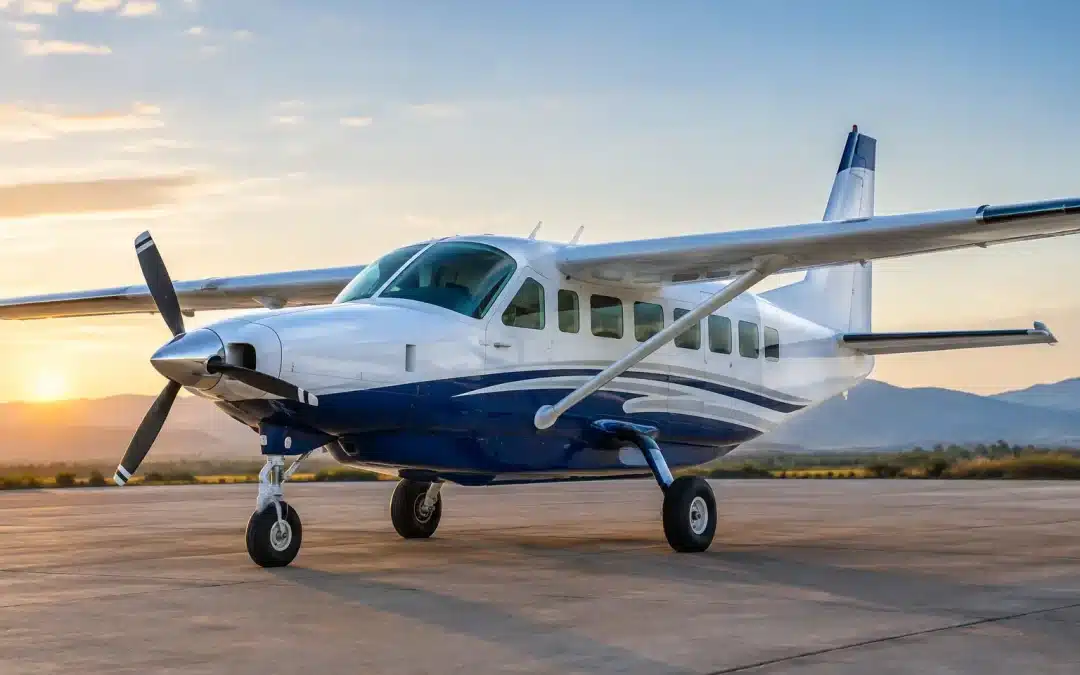
The Caravan's defining strength is utility. Its high wing, fixed tricycle landing gear, wide cargo door, and rectangular cabin make it easier to load people and equipment than many conventional cabin-class turboprops. The aircraft was designed around access and durability rather than luxury-first transportation, and that design choice remains central to its market appeal.
The standard Cessna 208 Caravan and the later 208B Grand Caravan family share the same basic operating philosophy, but the Grand Caravan's stretched fuselage and greater capacity changed its commercial usefulness. Later Grand Caravan EX models add more power, improving climb and hot-and-high performance while preserving the aircraft's familiar operating characteristics.
In practical terms, the Caravan is strongest on missions where a runway may be short, unimproved, or operationally inconvenient; where baggage or equipment matters as much as passenger count; or where dispatch reliability matters more than arriving 20 minutes sooner. It is also a logical step up for operators who have outgrown piston singles but do not need the complexity, acquisition cost, or airport requirements of a twin turboprop.
Its limitations are equally clear. Cruise speeds are typically in the range of roughly 160 to 170 knots, depending on variant, altitude, load, and power setting. Buyers focused on frequent 500- to 900-nautical-mile business trips may find a King Air, Pilatus PC-12, or light jet better aligned with the mission. The Caravan carries useful loads efficiently, but it is not a fast executive transport aircraft.
Cabin, Payload, and Mission Flexibility
A Caravan cabin is functional first. Passenger interiors can be comfortable and professionally finished, especially in executive or commuter layouts, but buyers should not expect the cabin refinement, pressurization, or noise environment of a PC-12 or larger twin turboprop. The aircraft earns its value through flexibility.
Depending on configuration and regulatory approval, the Caravan can support substantial passenger seating, cargo operations, or mixed-use layouts. The large cargo door is a material advantage for operators moving bulky items, not simply a brochure feature. For commercial operators, that access can reduce loading time and expand the type of work an aircraft can accept.
Payload requires closer analysis than a published maximum figure. Empty weight varies considerably with interior completion, air conditioning, avionics, cargo provisions, floats, special-mission equipment, and supplemental systems. A heavily equipped aircraft may have a very different real-world payload profile than a basic passenger model. Review the current weight-and-balance report, not just the original specification sheet.
Fuel planning is another practical constraint. The Caravan has good range for its category, but range, payload, reserve policy, and weather margins are connected. An operator carrying a full passenger load from a shorter runway on a hot day may not be flying the same profile as an owner carrying four people and bags from a long paved airport. Mission analysis should use the trips the aircraft will actually fly.
Performance and Operating Economics
The Caravan is powered by the Pratt & Whitney Canada PT6A family, one of the aviation industry's most established turboprop engine lines. That does not make ownership inexpensive, but it does give buyers a broad maintenance ecosystem, strong technician familiarity, and a well-understood engine support market.
Fuel burn commonly falls in a range that is manageable for a turbine aircraft but meaningful for a high-utilization operation. Actual consumption depends on model, power setting, altitude, mission length, and operational technique. Buyers should model fuel expense using their expected annual hours and local fuel pricing, then test the result against realistic revenue or utilization assumptions.
Fixed landing gear reduces some maintenance complexity compared with retractable-gear turboprops. The trade-off is aerodynamic efficiency. The aircraft's operating appeal is not based on the lowest fuel burn per nautical mile or the highest cruise speed. It is based on putting a durable, turbine-powered aircraft into airports and missions that may be impractical for faster alternatives.
Budgeting should extend beyond fuel and routine inspections. Engine reserves, propeller reserves, hot-section and overhaul planning, insurance, hangar or tie-down expense, training, avionics support, corrosion remediation, and unscheduled maintenance all belong in the ownership model. For commercial operators, labor, scheduling coverage, and downtime exposure can be just as important as direct maintenance cost.
Choosing Between Caravan Variants
The correct Caravan depends on the mission and the capital plan. Earlier 208 aircraft can represent an attractive entry point for buyers with modest passenger requirements or utility-focused work. Their purchase price may be lower, but the buyer should assess avionics currency, engine status, corrosion exposure, and future marketability carefully.
The 208B Grand Caravan offers more cabin length and passenger utility, making it the more common choice for operators that need capacity. Grand Caravan EX aircraft command attention because their increased power improves performance margins, particularly at elevation or in warm climates. That premium is justified when the operation needs it. For low-density, sea-level private use, it may not produce enough additional value to offset the higher acquisition cost.
Float-equipped Caravans occupy a specialized segment. They can support exceptional access, but float condition, corrosion history, water-operation experience, insurance requirements, and maintenance capability should be evaluated as core acquisition factors. A float conversion is not simply an equipment option. It changes the operating environment and the diligence required.
Avionics also affect value. A current integrated flight deck or a well-executed retrofit can improve training consistency, dispatch reliability, and resale appeal. Conversely, an aircraft with unsupported avionics, incomplete documentation, or an improvised panel modification may look inexpensive until the upgrade path is priced.
Prebuy Review: Where Caravan Transactions Are Won or Lost
A comprehensive prebuy inspection should be conducted by a facility with direct Caravan experience and should be scoped before money changes hands. The objective is not merely to identify airworthiness discrepancies. It is to establish a credible near-term maintenance forecast and confirm that the aircraft matches the represented configuration.
The records review should verify total time, engine time since overhaul, hot-section status, propeller status, damage and repair history, supplemental type certificates, major component serial numbers, and compliance with applicable airworthiness directives and service information. Missing logbook continuity is a valuation issue even when the aircraft appears well maintained.
Pay particular attention to corrosion, especially on aircraft operated in coastal environments, on floats, or in high-cycle commercial service. Inspect the airframe, landing gear, cargo areas, door mechanisms, and areas affected by water or contaminants. Operators should also examine the condition and calibration status of mission-specific equipment, whether that means seats, cargo provisions, cameras, medical interiors, or jump systems.
A test flight should validate more than cruise speed. Evaluate engine indications, starting behavior, cabin systems, avionics operation, autopilot performance, flap operation, braking, and any vibration or directional-control concerns. The aircraft should be flown by someone who understands normal Caravan characteristics and can distinguish them from developing issues.
Market Value and Resale Position
Caravan values are influenced by more than year and total time. Engine condition, maintenance pedigree, avionics, interior utility, damage history, operating environment, and configuration all materially affect market position. A clean passenger-configured Grand Caravan may appeal to a different buyer pool than a cargo-equipped aircraft with high utilization, even if the two airframes have similar basic specifications.
Transaction discipline matters because advertised pricing is only one data point. Buyers should compare active listings with completed sales, days on market, comparable configurations, and the cost of correcting deferred maintenance. FindAircraft.com combines current inventory with sales records, aircraft history information, and comparable data to help buyers establish a defensible value range before making an offer.
The best Caravan acquisition is usually not the lowest-priced listing. It is the aircraft whose configuration, records, maintenance condition, and operating profile align with the work it must perform. Define that work first, then let the market evidence determine what the aircraft is worth.