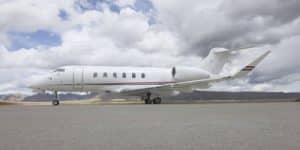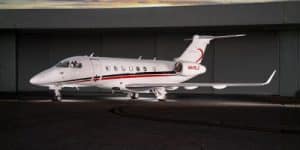
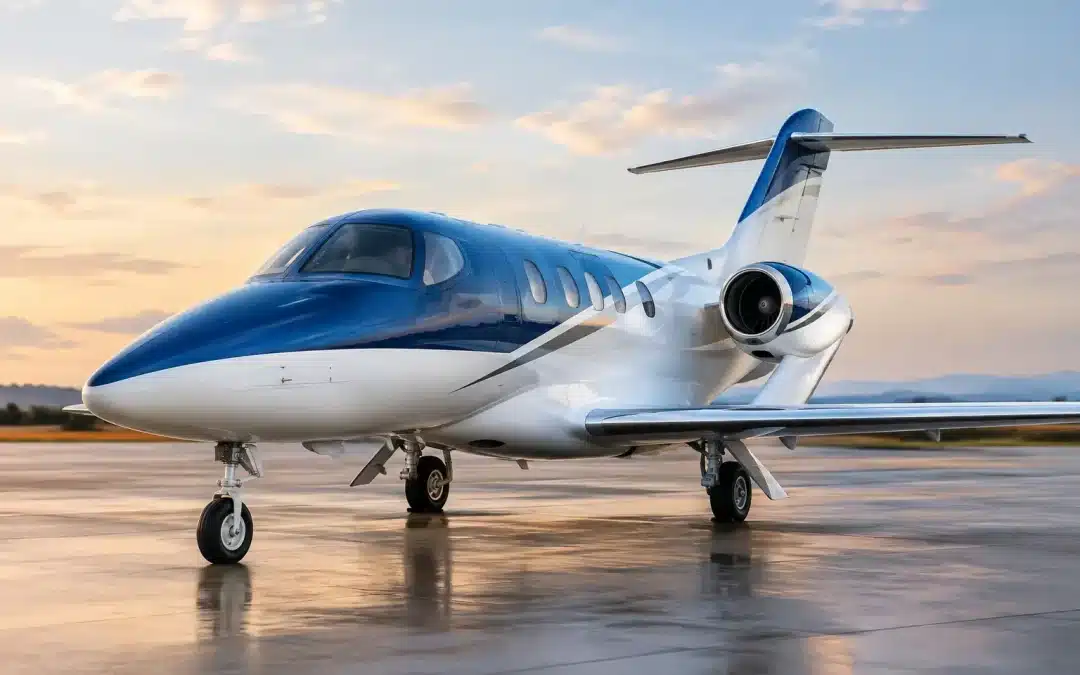
The HondaJet Elite II review starts with a question more useful than whether the aircraft looks distinctive on the ramp: does its combination of speed, range, and owner-operator practicality fit the missions you actually fly? For the right buyer, this is one of the most capable and polished very light jets available. For a buyer expecting midsize-jet cabin comfort, unrestricted baggage capacity, or long-range scheduling flexibility, its limits become clear quickly.
The Elite II is Honda Aircraft Company’s highest-specification production HondaJet variant, refining the established over-the-wing engine mount design with more range, updated avionics, and a more mature cabin package. It competes in a crowded segment where the Cirrus Vision Jet, Embraer Phenom 100EV, Cessna Citation M2 Gen2, and used Citation CJ-series aircraft can all enter the same acquisition conversation. The correct choice depends less on brand preference than on trip profile, passenger count, operating model, and the total cost of putting the aircraft into service.
HondaJet Elite II Performance and Mission Fit
Honda advertises a maximum range of 1,547 nautical miles under NBAA IFR conditions. That is a meaningful figure for the class, but buyers should treat it as a planning reference rather than a dispatch guarantee. Real-world range moves with passenger load, baggage, winds, routing, reserve policy, cruise altitude, and the operator’s preferred power setting.
For missions such as Dallas to Denver, Chicago to the Northeast, or Southern California to the Pacific Northwest, the Elite II can be highly effective when payload and weather cooperate. Its published maximum cruise speed of 422 knots helps it compete favorably with other VLJs on block time, particularly on trips long enough to benefit from the speed but short enough to avoid a fuel stop.
The aircraft’s 43,000-foot maximum operating altitude is also operationally useful. It provides access to smoother air and often more favorable winds, although an owner should not assume every trip will climb directly to the flight levels. Air traffic control, weight, temperature, and route structure all affect the profile. The Elite II’s two GE Honda HF120 turbofans are well matched to the platform, but they remain small, high-performance engines that require disciplined maintenance planning and accurate reserve assumptions.
The practical mission is usually two to four passengers with reasonable bags, flown on regional and domestic business trips. The aircraft can accommodate more occupants, but a full cabin changes the payload equation. This is where prospective buyers should stop comparing brochure range and start comparing usable range at their own expected load.
The over-the-wing engine mount is more than styling
HondaJet’s engine placement remains its defining engineering feature. By moving the engines above the wing, Honda preserved more fuselage volume than a conventional rear-mounted layout might allow in an aircraft of this size. The arrangement also contributes to its unmistakable profile and helps keep the rear fuselage free of the engine-pylon intrusion common in some light jets.
That does not make the design universally superior in every ownership scenario. Buyers should evaluate ground handling, line-service familiarity, hangar clearances, maintenance access, and insurance underwriting based on the specific operation. Distinctive engineering earns attention, but reliable dispatch depends on support access and operator preparedness.
Cabin, Cockpit, and Passenger Experience
The Elite II has a cabin that feels carefully designed rather than simply enlarged by marketing language. At approximately 66 inches high and 58 inches wide, it is not a stand-up cabin, and adults should not expect the room of a Citation CJ3+, Phenom 300, or larger aircraft. Still, for a VLJ, the space is competitive and makes productive short-to-medium-length trips realistic.
The typical executive configuration seats four in a club arrangement, with additional seating options depending on the installed interior. The fully enclosed lavatory is a meaningful advantage for business travel and family use. Cabin fit and finish, lighting, and noise control are generally among the HondaJet’s strongest selling points, especially for buyers moving up from high-performance turboprops or piston aircraft.
Baggage is another area where the Elite II deserves a close, mission-specific review. Honda cites up to 66 cubic feet of total baggage capacity across internal and external compartments. Volume alone is not the whole story. A set of golf clubs, bulky winter clothing, sample cases, mobility equipment, or multiple hard-sided bags can create loading constraints before the published number suggests a problem. Inspect the compartments in person and bring examples of the baggage your passengers actually carry.
Up front, the Garmin G3000-based flight deck includes features expected in a current-production business jet, including autothrottles and advanced automation. For a professional crew, the system supports efficient workload management. For an owner-pilot, it can be a major attraction, but it does not reduce the importance of type-specific training, recurrent training, and a realistic assessment of single-pilot proficiency.
Ownership Costs Require More Than an Hourly Number
No credible acquisition decision should be built around a single advertised hourly operating cost. Fuel, engine reserves, scheduled maintenance, unscheduled events, training, insurance, hangar, crew, subscriptions, management fees, and financing can each materially change annual ownership economics.
The Elite II’s smaller size can reduce fuel burn and some operating expenses relative to larger light jets. That is one of its central value propositions. Yet the cost advantage only matters if the aircraft can complete the missions without frequent fuel stops, payload compromises, or supplemental lift. A buyer who routinely flies five passengers with substantial baggage may save money per hour but lose utility across the annual schedule.
Insurance deserves particular attention. Underwriters will consider pilot experience, total time, turbine time, type training, intended use, geography, and whether the aircraft will be operated single-pilot or with professional crew. First-time jet owners should obtain insurance indications early, before selecting an aircraft or committing to a financing structure.
Maintenance support is equally important. Review the proximity and capacity of authorized service facilities, the availability of qualified mobile technicians, parts logistics, and the maintenance status of the specific aircraft. A well-priced aircraft positioned far from support or carrying an unfavorable maintenance calendar can become more expensive than a higher-priced example with clean records and better near-term predictability.
Where the Elite II Fits Against Its Rivals
The Elite II is strongest for buyers who prioritize a modern, efficient, fast VLJ with an appealing cabin and the ability to conduct serious regional travel. It has more conventional jet performance and a higher cruise ceiling than the Vision Jet, while offering a distinctive cabin and design proposition against the Phenom 100EV. Compared with the Citation M2 Gen2, the HondaJet can be compelling when efficiency, interior presentation, and specific runway-to-runway mission performance carry more weight than brand familiarity or service-network scale.
The used market adds another layer. A pre-owned Citation CJ1+, CJ2+, or even certain older light jets may offer a larger cabin, more baggage flexibility, or a different maintenance ecosystem at a similar acquisition price. Those aircraft can also bring older avionics, more engine exposure, greater fuel consumption, and potentially significant upcoming maintenance costs. The better deal is the aircraft that delivers the required mission with the fewest expensive compromises, not necessarily the one with the lowest asking price.
Acquisition Checks Before Making an Offer
A HondaJet Elite II should be evaluated as a complete asset, not just an airframe with attractive specifications. Confirm the serial number, total time, cycles, maintenance program enrollment, engine status, avionics software level, damage and repair history, ownership structure, liens, and export or registration considerations. Review logbooks for continuity and have a qualified maintenance specialist identify upcoming inspections, component limits, and service bulletin compliance.
Market context matters as much as technical condition. Asking prices are not transaction values, and a low-time aircraft is not automatically the best value if its delivery timing, maintenance position, or equipment specification does not match your operation. Comparable sales records, current competing inventory, days on market, and price adjustments help establish a defensible offer range. FindAircraft.com gives buyers a central workspace to compare active supply with historical market information before negotiations begin.
The pre-purchase inspection should be conducted at a facility with HondaJet experience and defined in writing before funds are placed at risk. Establish which discrepancies must be corrected by the seller, which findings permit price renegotiation, and when deposits become refundable or nonrefundable. This process is not administrative overhead. It is the point where an attractive listing becomes a verified acquisition.
For buyers whose typical trip is three passengers, regional distances, and a premium on speed and efficiency, the Elite II is a serious aircraft with unusually strong mission value. Bring your real routes, payload assumptions, and operating budget to the evaluation, then let the records and the numbers determine whether this HondaJet belongs in your fleet.