
A 2,000-foot runway can make an otherwise attractive aircraft a poor acquisition. The best aircraft for short runways is not simply the model with the lowest published landing distance. It is the aircraft that can consistently meet takeoff, landing, obstacle, loading, fuel, and reserve requirements at the specific airports an owner intends to use.
For buyers, that distinction affects aircraft value, operating flexibility, insurance requirements, and resale demand. A short-field-capable aircraft can expand access to private strips, remote business locations, mountain airports, and lightly developed destinations. It can also impose trade-offs in cruise speed, cabin size, acquisition cost, payload, or maintenance profile. The right choice starts with operational facts, not a generic runway-length target.
What Defines the Best Aircraft for Short Runways?
Published runway performance is a useful screening tool, but it is not an operating authorization. Manufacturers typically publish takeoff and landing figures under controlled conditions: defined weight, pavement condition, temperature, pressure altitude, wind, configuration, and pilot technique. A buyer who sees a published 1,500-foot landing distance should not assume a 1,500-foot strip is suitable for regular use.
The practical runway requirement must account for obstacle clearance, wet or contaminated surfaces, runway slope, grass or gravel, summer density altitude, aircraft weight, brake condition, and pilot proficiency. A 3,000-foot paved runway at sea level may be straightforward in winter and restrictive on a hot afternoon at a high-elevation airport.
For that reason, acquisition due diligence should evaluate more than a single book number. Review balanced field considerations where applicable, accelerate-stop margins, landing distance over a 50-foot obstacle, propeller clearance, tire options, and the aircraft's demonstrated performance at realistic operating weights. If the mission involves unimproved surfaces, examine manufacturer approvals and operating limitations rather than relying on anecdotal reports.
Aircraft Categories That Perform Well on Short Fields
The best category depends on whether the priority is utility, speed, cabin comfort, passenger capacity, or access to truly constrained strips. These are the principal market segments worth comparing.
Utility Turboprops: The Most Flexible Business Tool
For buyers who need a serious cabin and dependable short-field capability, single-engine utility turboprops are often the strongest answer. The Pilatus PC-12 and Daher TBM families serve different missions, while the Cessna Caravan and Kodiak models emphasize utility and low-speed field performance.
The Pilatus PC-12 is a frequent choice for owner-operators, charter operators, and corporate users because it combines a pressurized cabin, large cargo door, strong range, and operation from relatively short paved or approved unpaved runways. It is not the lowest-cost way to access a small strip, but it offers a rare mix of passenger comfort, payload capability, and broad airport access.
The Daher TBM family is more speed-oriented. It can work well at shorter paved airports, but buyers should be precise about margins at their expected arrival weight and density altitude. It is best viewed as a fast personal or business turboprop with capable runway performance, not as a substitute for a utility aircraft operating daily from soft, rough, or very short strips.
The Cessna Caravan remains a practical benchmark where payload, dispatch reliability, and field utility matter more than cruise speed. Its cabin configuration, cargo capability, and extensive support base make it compelling for commercial and specialized operations. The Kodiak is especially relevant when buyers expect frequent operation into short, rough, or remote fields. Its mission profile favors access and utility over pressurized-cabin comfort.
Piston Utility Aircraft: Capable Access at Lower Capital Cost
A well-equipped piston single may be the better transaction when the mission is regional, passenger loads are modest, and the runway is short without being extreme. Cessna 206 and 207 aircraft, Piper Super Cubs, Maule models, and certain experimental aircraft have long-established roles in backcountry, utility, and private-strip operations.
The Cessna 206 is a sensible comparison point for buyers who need doors, useful load, a familiar support network, and practical family or business transportation. It generally offers more cabin utility than lighter short-field aircraft, though performance changes materially with load and density altitude.
Maule aircraft appeal to buyers who prioritize short-field performance and useful load in a conventional piston platform. Their runway capability can be excellent, but ownership decisions should include a close review of avionics condition, corrosion exposure, engine time, maintenance documentation, and local service access. The same discipline applies to legacy tailwheel aircraft, where pilot experience and insurance terms can shape the true cost of ownership.
Light Sport and Backcountry Aircraft: Maximum Access, Narrower Mission
For the shortest private strips, lighter aircraft such as Cub derivatives, Aviat Husky models, American Legend Cubs, and selected experimental STOL designs can provide exceptional low-speed performance. Large tires, high-lift wings, light empty weights, and rugged landing gear can make a meaningful difference on grass, gravel, and uneven surfaces.
These aircraft are not direct alternatives to a PC-12, Caravan, or cabin-class piston single. They trade cabin space, speed, weather capability, payload, and sometimes dispatch consistency for access to places larger aircraft cannot realistically use. They are often an excellent fit for recreational owners, ranch operations, and pilots whose destination airport is the center of the mission.
Business Jets: Short-Field Capable, Not Short-Field Simple
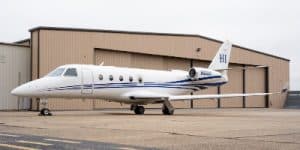
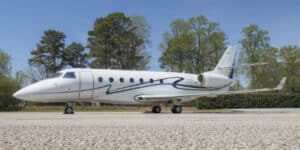
Some light and midsize business jets offer credible performance at shorter paved runways, particularly aircraft designed for efficient regional missions. The Pilatus PC-24 stands apart because it was developed with broad field capability in mind, including approved operations on certain unpaved surfaces. Several Citation models also provide strong runway performance relative to their class.
Even so, buyers should resist treating a light jet as a short-strip aircraft simply because a brochure lists a comparatively low landing distance. Jets are highly sensitive to runway condition, approach speed, obstacle environment, weight, and operational policy. A runway that works legally under ideal conditions may not provide the margin a corporate flight department, insurer, or prudent owner requires. For many jet missions, an additional few hundred feet of runway can materially improve operational reliability.
Compare the Mission Before Comparing Models
A disciplined search begins with the airports, not the airplane. Document the shortest runway to be used regularly, its surface, elevation, slope, obstacles, seasonal temperatures, and typical winds. Separate routine destinations from occasional destinations. An aircraft may be ideal for a 3,500-foot paved home airport but unsuitable for a 1,800-foot grass strip visited twice each year.
Next, establish the real payload requirement. Include passengers, baggage, equipment, fuel reserves, and any mission-specific cargo. Short-field capability frequently declines as takeoff weight rises, so an airplane that meets the runway requirement with two people and partial fuel may fail the business mission with four passengers and full bags.
Then consider how the aircraft will be flown. A highly capable tailwheel piston aircraft may demand more recurrent training and more disciplined technique than a tricycle-gear utility airplane. A sophisticated turboprop may offer excellent margins but introduce higher engine-reserve, maintenance, and insurance costs. The best acquisition is the one that matches both the runway and the operator.
Due Diligence That Protects the Purchase
Short-field claims should be verified during pre-purchase evaluation. Ask for the applicable aircraft flight manual performance charts, not only marketing summaries. Have a qualified pilot or training provider model takeoff and landing performance at the actual airport conditions and expected weights. If the home field is private or unconventional, review runway inspection records, surface maintenance, drainage, tree encroachment, and local obstacle conditions.
Pre-buy inspection should also focus on components that matter disproportionately in this mission: brakes, tires, landing gear, propeller condition, flap systems, stall-warning systems, and corrosion. For aircraft with regular grass, gravel, or unimproved-field exposure, inspect the underside, gear attach points, propeller leading edges, and airframe carefully. Logbook entries that merely state “off-airport” or “backcountry” use do not replace a detailed physical assessment.
Market availability matters as well. A rare configuration can appear attractive until a buyer discovers limited comparable sales, thin parts support, or a narrow resale pool. FindAircraft.com allows buyers to compare active inventory, historical transaction data, performance information, and aircraft history across the broader market before committing to a specific model.
Make Runway Margin a Purchase Requirement
The strongest short-field acquisition decisions build in margin rather than purchasing to the edge of the performance chart. That approach protects against hot weather, heavier-than-planned loads, changing runway conditions, and the realities of day-to-day flying.
Choose the aircraft that serves the hardest regular mission with room to spare, then validate the individual airframe's condition, equipment, records, and market position. A runway-capable aircraft is valuable only when its capability remains usable in the conditions where the owner actually needs it.